
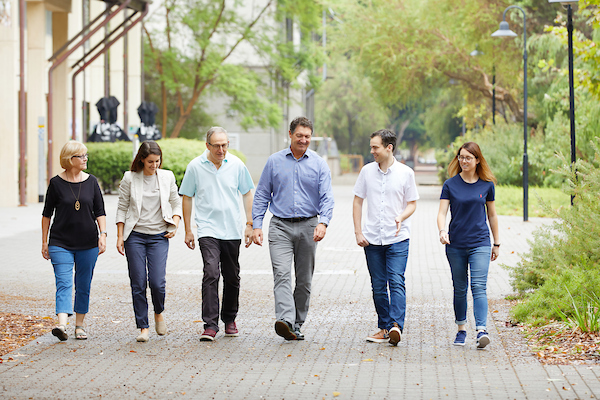
The Raine cohort are now between 18 and 20 years of age. 2009 saw the completion of the 17 year old follow up of the cohort. Over 1200 teenagers came to the Institute and completed an intensive 5 to 6 hour follow up. We applaud their commitment to the Raine Study.
The Raine study is currently asking members to participate in the 18 year-old Challenge-me Study, looking at stress levels in adolescents. This part of the Raine Study is nearly completed. Also as you turn 18 we we will ask for your own consent to continue participation in the Raine Study. [TURNING 18] Previously we required parental consent, after turning 18 years of age, The Raine Cohort are legally adults!
We are now starting the 20 to 21 year follow up of the cohort. There are three parts to the 20 year old follow up study.
We are looking at thinking styles! Are you an organised, logical thinker, or are you more intuitative and relaxed, or are you a mixture of both. We are asking all cohort members to complete a short questionnaire, either online or on paper. Everyone should have received information on this by the end of April.
We asking the male cohort members to participate in research on young adult male health.
And the main follow up of the cohort is concentrating on eye health. 20 is the age when eyesight is generally at its optimum.
We are collaborating with researchers at the Lions Eye Institute (LEI) and asking participants to do series of eyes tests. These will provide you with a free and comprehensive eye examination. This includes tests of vision, eye movements, intra ocular pressure and photographs of the eyes. At the same time, we are also offering the opportunity for participants to have a DEXA scan. DEXA stands for Dual-energy X-ray Absorptiometry. The DEXA scan measures body composition. This is very different to the usual measures of weight and BMI. The DEXA divides the body into bone mass, lean mass (organs and muscles) and fat mass. Two people can have the same weight, but can have different amounts of lean mass, fat mass and bone mass. People trying to lose weight through healthy eating and exercise sometimes find that although they are exercising regularly their weight remains the same. Their fat mass will be reducing, but their muscle mass will also be increasing so their 'weight' or mass remains the same. This is why Body Mass Index (BMI) can sometime be misleading as a measure of healthy weight. People with high muscle mass can have a high BMI.
Results of all these tests will be given at the time of assessment.
James - Raine participicant
Last updated 8 April 2010